

GST on Coal Under Review: Rising Costs Could Push India Towards Green Energy

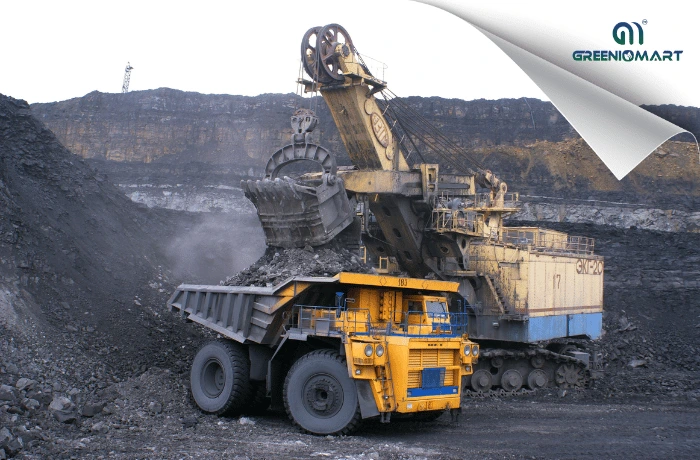
The Goods and Services Tax (GST) Council is once again in the spotlight, with its upcoming meeting expected to decide the fate of coal taxation in India. At present, coal attracts 5% GST along with a compensation cess of ₹400 per tonne. This cess, introduced to compensate states for GST revenue losses, is set to lapse by March 2026, though the Council is considering ending it sooner.
The big question before policymakers is whether to:
Increase GST on coal from 5% to 18% to make up for lost revenue, or
Introduce a new levy similar to the pre-GST “Clean Energy Cess” to continue funding state revenues.
Impact on Industries
Captive Coal Users (steel, cement, aluminium): Expiry of the cess could bring relief as these industries can claim Input Tax Credit (ITC) on GST. A higher GST rate may not hurt them significantly if ITC offsets the burden.
Thermal Power Producers: The situation is complex. Since electricity is exempt from GST, power plants cannot claim ITC. If GST rises to 18%, the cost of electricity generation may go up, squeezing margins of state distribution companies (DISCOMs).
States’ Revenue Concerns: With cess expiry, states may increase mineral levies to cover revenue gaps. Jharkhand, for example, has already raised its coal levy from ₹100 to ₹250 per tonne.
Currently, the combination of 5% GST and cess makes the effective tax incidence on coal between 15%–40%, depending on coal grade. Experts suggest that shifting to 18% GST without cess may bring some savings for low-grade coal users, while high-grade users may see little change.
What It Means for the Green Energy Sector
While this may appear as just another taxation debate, the implications for green energy transition are significant:
Higher Coal Power Costs = Renewables More Attractive
If coal-based electricity becomes costlier, solar, wind, biomass, and CBG (compressed biogas) projects become comparatively more competitive.
Industries under pressure to reduce costs may accelerate renewable adoption.
Push for Diversification
Rising mineral levies and taxation uncertainties make coal less stable as an energy option.
This creates stronger incentives for industries to sign long-term renewable energy purchase agreements.
Policy Alignment with Energy Transition
Even though the government has announced plans for 80 GW of new thermal power capacity by 2032, the global and domestic policy push remains in favor of clean energy.
Coal GST changes may indirectly accelerate investments into renewable infrastructure.
Future Outlook
The GST Council’s decision will shape not only the coal industry but also India’s broader energy mix. If GST is raised to 18%, it may initially create cost pressure on thermal power, but in the long run, it could serve as a policy nudge towards renewables.
For the green energy ecosystem, this development highlights a crucial trend: as fossil fuel economics become less favorable, renewable energy gains a stronger foothold.