




India Achieves 250 GW Non-Fossil Energy Capacity: A Historic Renewable Energy Milestone

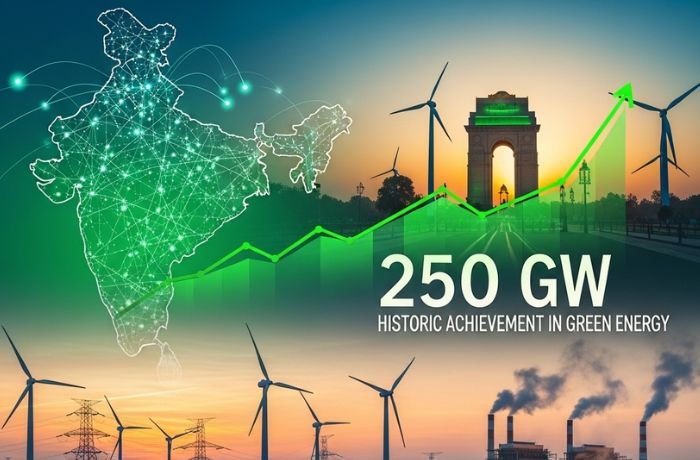
India has created history by achieving 251.41 GW of non-fossil energy capacity, well ahead of schedule. This achievement highlights India’s growing commitment to renewable energy and environmental sustainability, making the country a global leader in the green energy transition.
Breakdown of India’s Non-Fossil Energy Capacity
India’s installed non-fossil capacity is derived from multiple clean energy sources:
Solar Energy: 123.13 GW (49%) – India’s largest contributor, showcasing its leadership in solar adoption.
Wind Energy: 52.68 GW (21%) – Major contributions from coastal states like Gujarat, Tamil Nadu, and Andhra Pradesh.
Hydro + Nuclear Power: 64 GW (25%) – Stable and reliable sources supporting consistent power supply.
Bio-Energy: 11.60 GW (5%) – Turning agricultural and organic waste into clean energy solutions.
Why This Achievement Matters?
✅ Strengthens India’s energy security by reducing dependency on fossil fuels.
✅ Supports carbon emission reduction and climate change commitments.
✅ Creates new opportunities in green jobs, innovation, and technology adoption.
✅ Establishes India as a global leader in renewable energy development.
India’s Future Energy Roadmap
India has set an ambitious target of achieving 500 GW non-fossil capacity by 2030. This progress not only supports the country’s “Net Zero by 2070” commitment but also aligns with global climate action goals.
The Ministry of New and Renewable Energy (MNRE) has emphasized that this milestone is proof of India’s determination to meet its environmental commitments while ensuring rapid economic growth.
Key Highlights:
India surpasses 250 GW non-fossil capacity milestone.
Solar leads with 123.13 GW, followed by wind (52.68 GW).
Hydro + Nuclear contribute 64 GW, and bio-energy adds 11.60 GW.
Achievement strengthens India’s renewable energy leadership globally.